The Architects of Excellence
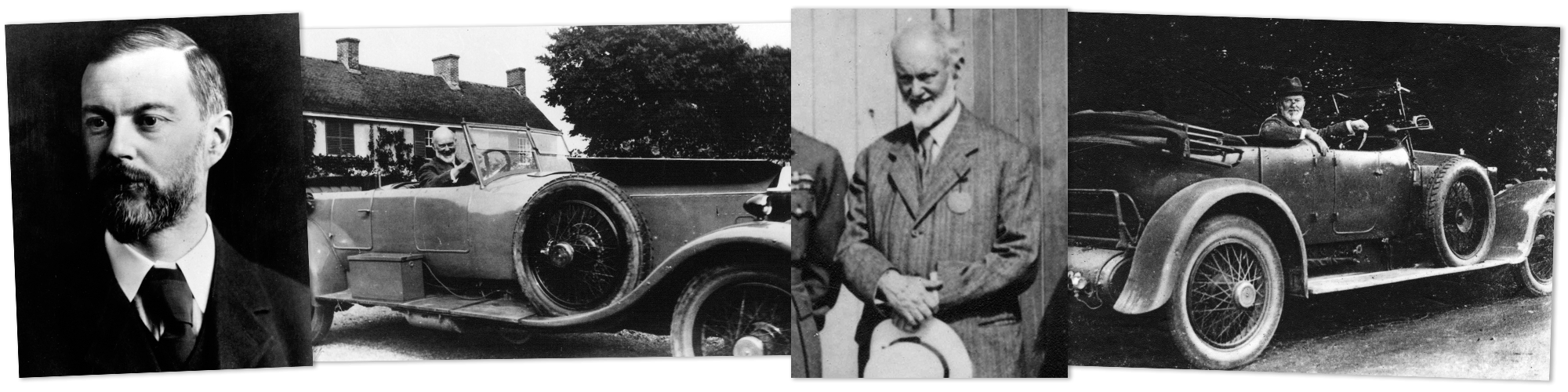
Sir Henry Royce (1863–1933)
Henry Royce was an English engineer whose obsession with precision helped define modern engineering excellence. Born in Alwalton, England, to a modest family, Royce left school at a young age after his father’s death and educated himself through apprenticeships and night classes. His early life was marked by financial hardship, but also by an intense drive to master mechanical craft.
Royce first found success in electrical engineering, founding a small company that made dynamos and cranes. His turning point came in 1903, when dissatisfied with the quality of a French car he owned, he decided to build a better one himself. That decision led to a partnership with the aristocratic motoring enthusiast Charles Rolls, and in 1906 the company that would become Rolls-Royce was formed.
Royce’s relentless standards shaped the firm’s reputation. He famously believed that “whatever is rightly done, however humble, is noble,” and he demanded near-perfection in design and manufacturing. His work culminated in the Silver Ghost, a car so smooth and reliable that it was widely called “the Best Car in the World.”
Knighted in 1930 for his contributions to engineering, Sir Henry Royce spent much of his later life in poor health but remained deeply involved in design until his death in 1933. His legacy endures not just in luxury automobiles and aircraft engines, but in the enduring ideal that engineering should always strive for excellence.
Charles Rolls (1877–1910)
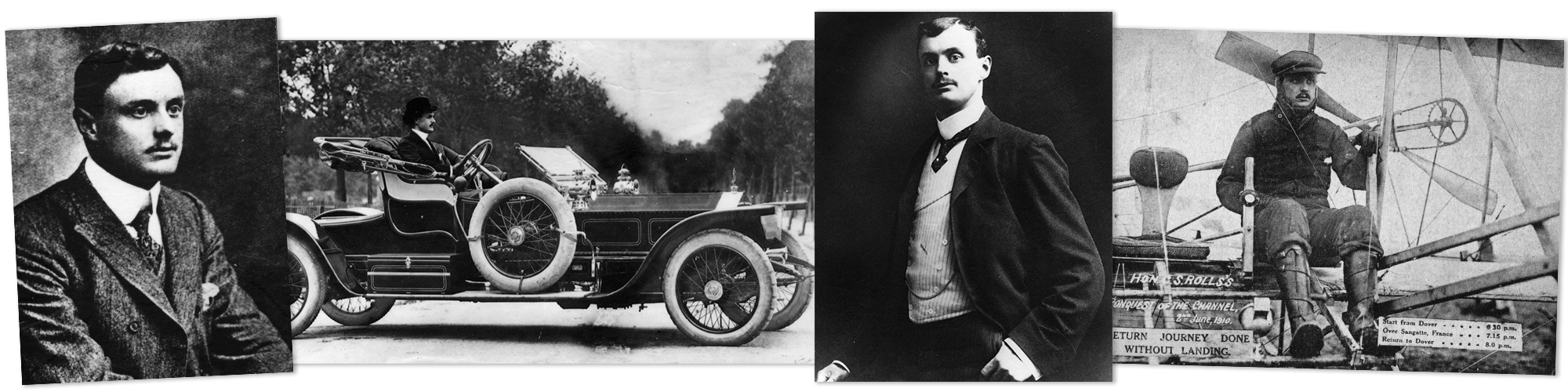
Charles Rolls was a British aristocrat, engineer, and pioneer of both motoring and aviation, best remembered as a co-founder of Rolls-Royce.
Born into a wealthy Welsh family, Rolls was educated at Eton and Trinity College, Cambridge, where he developed a passion for mechanics and speed. He became one of Britain’s earliest car enthusiasts, importing and racing French automobiles at a time when motoring was still a novelty. In 1903, he founded C. S. Rolls & Co., one of the first car dealerships in the UK.
Rolls’s most lasting achievement came in 1904, when he met engineer Henry Royce. Their partnership combined Royce’s engineering brilliance with Rolls’s business acumen and flair for promotion, leading to the creation of Rolls-Royce in 1906. The company quickly earned a reputation for exceptional quality, cemented by the legendary Silver Ghost.
Beyond cars, Rolls was a passionate aviation pioneer. He became the first Briton to make a non-stop round-trip flight across the English Channel in 1910. Tragically, later that same year, he was killed in an aircraft accident at the age of 32—becoming the first British fatality in a powered airplane crash. Despite his short life, Charles Rolls played a pivotal role in shaping both the automotive and early aviation worlds.
Claude Johnson (1864–1927)
Claude Johnson is often called the hyphen in Rolls-Royce because he was the vital link who fused the engineering genius of Royce with the commercial polish of Rolls.
Born in 1864, Johnson trained as an accountant, not an engineer. His gift was organisation, strategy, and taste—skills that proved decisive when he brought together Henry Royce, the meticulous engineer, and Charles Rolls, the charismatic salesman and racer. While Royce built superb machines and Rolls sold the dream, Johnson made the enterprise work.
As managing director of Rolls-Royce from its founding in 1906, Johnson shaped the brand’s identity. He insisted on absolute quality, pushed for quietness and reliability as defining virtues, and masterminded the company’s reputation for refinement. He also championed the car that sealed Rolls-Royce’s legend: the Silver Ghost, proving through endurance trials that luxury could be bulletproof.
After Charles Rolls’ death in 1910, Johnson became even more central—protecting the brand, supporting Royce’s exacting standards, and guiding Rolls-Royce into aero engines during World War I. He retired in 1926 and died in 1927, leaving behind something rarer than a great product: a great standard.